Active Passive Voice Rules Chart In Hindi

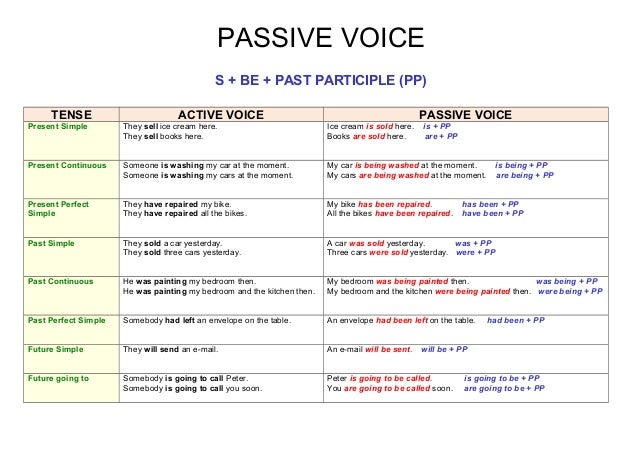
Active/Passive Voice Rules Chart The object of the verb takes the position of Subject. The Subject of the verb in the active voice becomes the object and is usually preceeded by the preposition 'by'. The tense of the verb in the passive voice remains the same as in the active voice. Active and passive voice, worksheets, rules, examples (PDF): You must have the knowledge of active and passive sentences (What is a sentence?) as an English learner.
Active and Passive Voice in Hindi - English Grammar in Hindi Learn about the use of be, being, been इस वीडियो में मैं आपको active से passive बनाने के सभी Rules बताऊंगा। English Grammar के अनुसार Tenses के माध्यम से आपको Active to Passive बनाना बताऊंगा और साथ ही साथ Tenses की जानकारी भी दुंगा। आप इस video से be, being, been के सही Use के बारे में भी जानकारी प्राप्त करेंगे । Future continuous और तीनों present, past, future - perfect continuous के passive नहीं बनते हैं. केवल simple present tense, present continuous tense, Present perfect tense, simple past tense, past continuous tense, past perfect tense, simple future tense, future perfect tenseके ही passive voice या passive sentence बनते हैं । इस विडियो में मैं इन सभी 8 tenses के Structures और Rule भी बताऊंगा जिससे आप आसानी से समझ सकेंगे। English Speaking सीखने वालों के लिए ये Video बहुत महत्वपूर्ण है. So watch this video and learn active and passive in English grammar in Hindi.
Configurar Jdownloader Con Ultrasurf For Firefox. This video is useful for all those who want to learn English grammar for general use, as well as participate in competitive examinations such as SSC CGL, Bank Examination, CAT Examination and SBI PO etc. Thanks English grammar playlist - Facebook page Tweeter My channel Google plus.
Simple Present tense An Active sentence in the simple present tense has the following structure: Subject + first form of the verb + object A passive sentence in the simple present tense has the following structure: Object of the active sentence + is/am/are + past participle form of the verb + by + subject of the active sentence Changing an assertive sentence into the passive Active: I write a letter. Passive: A letter is written by me. Active: I help you. Passive: You are helped by me. Active: I love my parents.
Passive: My parents are loved by me. Active: We love our country.
Passive: Our country is loved by us. Changing a negative sentence into the passive Active: I do not write a letter. Passive: A letter is not written by me. Active: I do not abuse my servants. Passive: My servants are not abused by me.
Active: I do not write novels. Passive: Novels are not written by me. Active: He does not tease her. Passive: She is not teased by him. Changing an interrogative sentence into the passive Structure: Is/are/am + object of the active verb + past participle form of the verb + by + subject of the passive verb Active: Do you write a letter?
Passive: Is a letter written by you? Active: Do you write stories? Passive: Are stories written by you? Active: Does she make candles? Saints Row 4 Main Menu Theme Download Mp3 on this page. Passive: Are candles made by her?
Active: Who does not obey you? Passive: By whom are you not obeyed? Active: Which newspaper do you read? Passive: Which newspaper is read by you? Active: Does she do her duty?
Passive: Is her duty done by her? Notes: The object of the active verb becomes the subject of the passive verb. Therefore, sentences which do not have an object cannot be changed into the passive.
The following sentences, for instance, cannot be changed into the passive because they do not have objects. The old man sat in a corner. The child sleeps. The wind blows. The dog barks. The fire burns. He laughed aloud.