How To Install Windows 7 X64 On Raid 0
Windows 8 works great on the same hardware that powers Windows 7. Processor: 1 gigahertz (GHz) or faster RAM: 1 gigabyte (GB) (32-bit) or 2 GB (64-bit) Hard disk space: 16 GB (32-bit) or 20 GB (64-bit) Graphics card: MicrosoftDirectX 9 graphics device or higher Additional requirements to use certain features: • To use touch, you need a tablet or a monitor that supports multitouch. • To access the Windows Store and to download and run apps, you need an active Internet connection and a screen resolution of at least 1024 x 768. • To snap apps, you need a screen resolution of at least 1366 x 768. You will not be able to enter a Window Media Center Pack or Windows 8 Pro Pack product key. These are considered to be an upgrade key and can't be used to install Windows 8/8.1.
These can only be added after Windows 8/8.1 is installed, then use to upgrade to the Window Media Center Pack or Windows 8 Pro Pack. If you have a retail Windows 8 product key and want to clean install W indows 8, then see instead. If you have a retail Windows 8 product key and want to clean install Windows 8.1 or Windows 8.1 Update, then you would need to enter a generic key below to install unactivated with, and change the product key later on in below to activate with your Windows 8 key.
If you have a retail Windows 8.1 product key and want to clean install Windows 8.1 or Windows 8.1 Update, then you are good. If you have an OEM Windows 8 product key and want to clean install W indows 8.1 or Windows 8.1 Update, then you would need to enter a generic key below to install unactivated with, and change the product key later on in below to activate with your OEM Windows 8 COA product key. If you want to clean install W indows 8 Enterprise, W indows 8.1 Enterprise, or W indows 8.1 Update Enterprise, then you would need to change the product key later on in below to activate since Enterprise editions do not ask to enter a key at this step. Generic keys to install with: • Windows 8 (core): FB4WR-32NVD-4RW79-XQFWH-CYQG3 • Windows 8 Pro: XKY4K-2NRWR-8F6P2-448RF-CRYQH • Windows 8 Pro with Media Center: RR3BN-3YY9P-9D7FC-7J4YF-QGJXW • Windows 8.1 (core): 334NH-RXG76-64THK-C7CKG-D3VPT • Windows 8.1 (core single language): Y9NXP-XT8MV-PT9TG-97CT3-9D6TC • Windows 8.1 Pro: XHQ8N-C3MCJ-RQXB6-WCHYG-C9WKB • Windows 8.1 Pro with Media Center: GBFNG-2X3TC-8R27F-RMKYB-JK7QT • Windows 8.1 Enterprise: MNDGV-M6PKV-DV4DR-CYY8X-2YRXH OR FHQNR-XYXYC-8PMHT-TV4PH-DRQ3H KMS setup keys (8/8.1).
Select a hard drive or partiton that you want to do a clean install of Windows 8 on, do one of the options for how you want to install Windows 8 to that drive or partition in the yellow TIP box below, then click/tap on the Next button when finished. (see screenshot below) NOTE: If your hard drive is not displayed and it's either a SATA drive or in a RAID setup, then you need to connect a USB key or DVD disc with the RAID or SATA drivers on it, click on, select the folder on the USB key or DVD that contains the RAID or SATA drivers to install them.
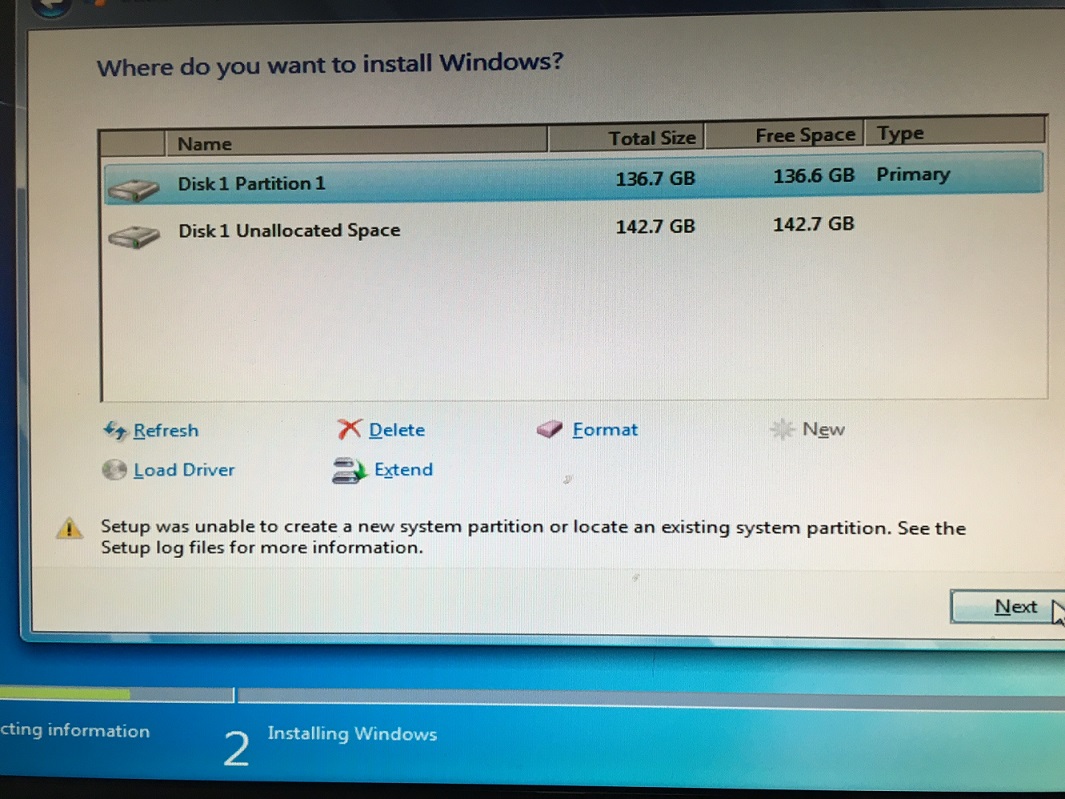

Afterwards, your RAID drives will be available to select from to install Windows 8 on. Drive options (advanced) If you only have one partition for a disk # (hard drive) listed that you wanted to install Windows 8 on, then select the disk # and click on the Delete option if not grayed out to make it unallocated space.
If you have more than one partition for a disk # (hard drive) listed and want to install Windows 8 on only one of the partitions and keep the other partitions with that disk #, then only select the partition that you want to install Windows 8 on the Format option. Lg Android Phone Driver For Windows 7. If you have more than one partition for a disk # (hard drive) listed and want to get rid of all of them to make that disk # one single partition drive again, then select a partition with that disk # and click on the Delete option for each partition with the same disk # until there is only one 'unallocated space' with that disk # left as in the screenshot below.
Is that correct? So I basically have to remove XP, then set up RAID 0 in BIOS and then insert the Win7 DVD and start the setup. There's one more thing I'm not sure about; it said somewhere that I need to have a USB flash drive with the RAID driver in order to successfully install Win7 on the RAID 0 array. I have three C300 64GB SSD's on the way to me. I was planning to install them in Raid 0 on my system listed in my signature as the boot drive and the.
To shrink an existing partition to create another partition to install Windows 8 on instead, select the partition that you want to shrink and click on the Extend option. Type in how much in MB (1 GB = 1024 MB) that you want to shrink it. Now select the new extended partition. The 350 MB System Reserved partition is used for the Boot Manager code, BCD (Boot Configuration Database), (Windows RE), and start up files for (if turned on).
If you want to have (recommended) the 350 MB System Reserved partition in addition to the Windows 8 C: partition on a HDD or SSD after installation, then you would need to make sure that all partitions on the drive have been deleted until it is only unallocated space. Next, select the unallocated drive to install Windows 8 on. If there are no partitions on the disk, you will get the 350 MB System Reserved. Network Topology Mapper Activation Key.
If you do not want to have the 350 MB System Reserved partition and only the Windows 8 C: partition on a HDD or SSD after installation, then select a formatted partition or drive to install Windows 8 on. If there are any partitions on the disk, you won't get the 350 MB System Reserved.
Microsoft account: • You use your email address and password to sign in to Windows 8. • When you sign in with a Microsoft account, your PC is connected to the cloud. • Your friends’ contact info and statuses are automatically up to date from your Hotmail, Facebook, Twitter, LinkedIn, and other accounts. • You can get to and share your photos, documents, and other files from SkyDrive, Facebook, Flickr, and other accounts without signing in to each one.
• Your personal settings are synced to any PC running Windows 8 that you sign in to, including your themes, language preferences, browser favorites, and apps. • You can get apps in the and use them on any PC running Windows 8 that you sign in to. • Easily reacquire your Metro style apps on multiple Windows 8 PCs. The app’s settings and last-used state persist across all your Windows 8 PCs. • You can associate the most commonly used Windows settings to your user account. In this way, the saved settings are available when you sign in to your account on any Windows 8 PC.
So your PC will be set up just the way you are used to. • You can also save time with sign-in credentials, because now the same credentials are available for the different apps and websites you use and you can easily get back into them without having to enter credentials every time. • You can automatically sign in to apps and services that use Windows Live ID for authentication. Keyboard Logitech Wave Mouse CM Sentinel PSU Corsair HX650W Case Cooler Master Storm Scout Cooling Corsair H80 w/Noctua NF P12 12cm fan, case fans 2X14cm Hard Drives Samaung 840Pro 128GB, Seagate 500GB SATA2 7200rpm 32mb, Seagate 1TB SATA2 7200rpm 32mb, Internet Speed Abysmal Browser Opera Next Other Info Dell Venue 8Pro: Baytrail Z3740D, 2GB Ram, 64GB HDD, 8' IPS Display 1280 x 800, Active Stylus.
Haswell laptop: HP Envy 17t-j, i7-4700MQ, GeForce 740M 2GB DDR3, 17.3' Full HD 1920x1080, 16GB RAM, Samsung 840 Pro 128GB, 1TB Hitachi 7200 HDD, Desktop: eSATA ports, External eSATA Seagate 500GB SATA2 7200rpm. System Manufacturer/Model Number ASUS 1002HA/XP Netbook OS Win 8 CPU ntel Atom N270 @ 1.60GHz Diamondville 45nm Technology Motherboard ASUSTeK Computer INC. 1002HA (PBGA 437) Memory 2.00 GB Single-Channel DDR2 @ 266MHz (4-4-4-12) Graphics Card Digital Flat Panel (1024x768 60Hz) (1024x600@60Hz) Mobile Intel(R) 945 Express Chipset Family Mobile Sound Card Realtek High Definition Audio Monitor(s) Displays Digital Flat Panel (1024x768 60Hz) on Mobile Intel 945 Express Chipset Family Screen Resolution 1024x600 pixels. Hello Karl, Actually, the 'System Reserved' partition is only created when Windows is installed on a unallocated disk (HDD). If the disk has been formatted prior to installation either via the method you used in a command prompt at boot or during the installation at step 7, then the 'System Reserved' will not be created.
Personally, I find it easier to do at step 7 using Drive options (advanced) in the tutorial. Either way, you should still be able to create more partitions if you like. You would just need to select which partition to install Windows 8 to when you get to step 6 or 7. System Manufacturer/Model Number ASUS 1002HA/XP Netbook OS Win 8 CPU ntel Atom N270 @ 1.60GHz Diamondville 45nm Technology Motherboard ASUSTeK Computer INC. 1002HA (PBGA 437) Memory 2.00 GB Single-Channel DDR2 @ 266MHz (4-4-4-12) Graphics Card Digital Flat Panel (1024x768 60Hz) (1024x600@60Hz) Mobile Intel(R) 945 Express Chipset Family Mobile Sound Card Realtek High Definition Audio Monitor(s) Displays Digital Flat Panel (1024x768 60Hz) on Mobile Intel 945 Express Chipset Family Screen Resolution 1024x600 pixels.
Hello Param, and welcome to Seven Forums. What are you using (ex: USB/DVD) to install with, and what type of HDD setup (ex: single HDD, RAID, PCI-E SSD, etc.) are you installing to? Usually this means that the installation DVD may be corrupted, and you will need to burn a new copy at a slower speed (4x or less) on a blank unformated DVD. If you have not already, you might try creating a Windows 8 bootable USB flash drive to install with instead if you happen to have a USB laying about.
When you use it, you'll need to select, by pressing the F# key it says for it on boot screen, to boot to the boot menu to select to boot from the USB. Hope this helps for now, Shawn.
Hello I have ASUS M5A97 Evo motherboard and it is driving me crazy for past 1 month, so far i spoke to asus support and went to so many forums and no luck. I am not able to properly install windows 7 64bit on my pc with 2 SSD 120GB as Raid 1 So i am not sure what to do here to get UEFI and Raid 1 to work properly The main issue is that the OS is very un stable and i am not sure why I also posted here and few guys tried to help but no luck Can someone advise Thank you.
If you are wanting to use RAID, you should make sure that all discs are the same make and model. You do not need to install in UEFI mode if you are only using a 120GB boot volume you do not need to install in EFI mode.
UEFI boot is only useful if your boot volume is greater than 2TB, or you want to use advanced UEFI 2.3.1 functions such as SecureBoot. Hello Do you mean i dont need UEFI if my hard drive C: is less then 2 TB?? If so i did not know that I thought i need UEFI Fuction so i can install Windows 7 on SSD because i have more data drives of size of 2TB and 3TB and 4 TB so please advise? Also Trying to install again and seeing all kind of different error but i notice something this time a new error: Windows cannot be installed to this disk. 'Windows cannot be installed to this disk. This computer's hardware may not support booting to this disk. Ensure the disk's controller is enabled in the computer's BIOS menu.'
I am 100% Sure this error has something to do with TRIM Support in SSD and ACHI Mode under UEFI and Raid 1 as Raid 1 Uses legacy Mode which is IDE/SATA Not sure how to fix this Thanks.