Download Journal Of Plague Year Defoe Pdf Free
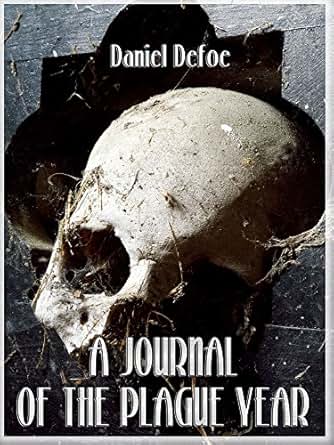
A Journal of the Plague Year. Daniel Defoe. The cover for the Standard Ebooks edition of A Journal of the Plague Year. 94,924 words (5 hours 46 minutes) with a reading ease of 42.11 (difficult).
Collecting the dead for burial during the Great Plague The Great Plague, lasting from 1665 to 1666, was the last major epidemic of the to occur in. It happened within the centuries-long time period of the, an extended period of intermittent bubonic plague epidemics which began in Europe in 1347, the first year of the, an outbreak which included other forms such as, and lasted until 1750. The Great Plague killed an estimated 100,000 people—almost a quarter of London's population—in 18 months. The plague was caused by the, which is usually transmitted through the bite of an infected rat flea.
The 1665–66 was on a far smaller scale than the earlier Black Death; it was remembered afterwards as the 'great' plague mainly because it was the last widespread outbreak of bubonic plague in England during the 400-year timespan of the Second Pandemic. Map of London by Wenceslas Hollar, c.1665 As in other European cities of the period, the plague was endemic in 17th century London. The disease periodically erupted into massive epidemics. There were 30,000 deaths due to the plague in 1603, 35,000 in 1625, and 10,000 in 1636, as well as smaller numbers in other years. During the winter of 1664, a bright comet was to be seen in the sky and the people of London were fearful, wondering what evil event it portended. London at that time consisted of a city of about 448 acres surrounded by a, which had originally been built to keep out raiding bands. There were gates at,,,, and and to the south lay the and.
In the poorer parts of the city, hygiene was impossible to maintain in the overcrowded tenements and garrets. There was no sanitation, and open drains flowed along the centre of winding streets. The cobbles were slippery with animal dung, rubbish and the slops thrown out of the houses, muddy and buzzing with flies in summer and awash with sewage in winter. The employed 'rakers' to remove the worst of the filth and it was transported to mounds outside the walls where it accumulated and continued to decompose. The stench was overwhelming and people walked around with handkerchiefs or pressed against their nostrils.
Some of the city's necessities such as coal arrived by, but most came by road. Carts, carriages, horses and pedestrians were crowded together and the gateways in the wall formed bottlenecks through which it was difficult to progress. The nineteen-arch London Bridge was even more congested. The better-off used and to get to their destinations without getting filthy. The poor walked, and might be splashed by the wheeled vehicles and drenched by slops being thrown out and water falling from the overhanging roofs.
Another hazard was the choking black smoke belching forth from factories which made, from and iron and from about 15,000 houses burning coal. Outside the city walls, suburbs had sprung up providing homes for the craftsmen and tradespeople who flocked to the already overcrowded city. These were with wooden shacks and no sanitation. The government had tried to control this development but had failed and over a quarter of a million people lived here. Other immigrants had taken over fine town houses, vacated by who had fled the country during the, converting them into tenements with different families in every room. These properties were soon vandalised and became rat-infested slums. Administration of the City of London was organised by the Lord Mayor, Aldermen and common councillors, but not all of the inhabited area generally comprising London was legally part of the City.
Both inside the City and outside its boundaries there were also, which were areas of varying sizes which historically had been granted rights to self-government. Many had been associated with religious institutions, and when these were abolished in the, their historic rights were transferred along with their property to new owners. The walled City was surrounded by a ring of Liberties which had come under its authority, contemporarily called 'the City and Liberties', but these were surrounded by further suburbs with varying administrations. Was an independent town with its own liberties, although it was joined to London by urban development. The was an independent liberty, as were others.
Areas north of the river not part of one of these administrations came under the authority of the county of, and south of the river under. The, dating from the 1560s At that time, bubonic plague was a much feared disease but its cause was not understood. The credulous blamed emanations from the earth, 'pestilential effluviums', unusual weather, sickness in livestock, abnormal behaviour of animals or an increase in the numbers of moles, frogs, mice or flies. It was not until 1894 that the identification by of its causal agent was made and the transmission of the by became known. Although the Great Plague in London had long been believed to be bubonic plague caused by Yersinia pestis, this was only definitively confirmed by DNA analysis in 2016. The recording of deaths [ ] In order to judge the severity of an epidemic, it is first necessary to know how big the population was in which it occurred. There was no official census of the population to provide this figure, and the best contemporary count comes from the work of (1620–1674), who was one of the earliest and one of the first, bringing a scientific approach to the collection of statistics.
In 1662, he estimated that 384,000 people lived in the City of London, the Liberties, Westminster and the out-parishes, based on figures in the published each week in the capital. These different districts with different administrations constituted the officially recognised extent of London as a whole. In 1665, he revised his estimate to 'not above 460,000'. Other contemporaries put the figure higher, (the French Ambassador, for example, suggested 600,000) but with no mathematical basis to support their estimates. The next largest city in the kingdom was Norwich, with a population of 30,000.
Bacteria appear as a dark mass in the gut. The bacteria block the flea's digestive system, leaving it hungry but unable to eat. Instead, when it tries to feed, it regurgitates Yersinia into the wound. There was no duty to report a death to anyone in authority. Instead, each parish appointed two or more 'searchers of the dead', whose duty was to inspect a corpse and determine the cause of death. A searcher was entitled to charge a small fee from relatives for each death they reported, and so habitually the parish would appoint someone to the post who would otherwise be destitute and would be receiving support from the parish poor rate. Typically, this meant searchers would be old women who were illiterate, might know little about identifying diseases and who would be open to dishonesty.
Searchers would typically learn about a death either from the local sexton who had been asked to dig a grave, or from the tolling of a church bell. Anyone who did not report a death to their local church, such as,, other non-Anglican Christians or, frequently did not get included in the official records. Searchers during times of plague were required to live apart from the community and stay indoors except when performing their duties, for fear of spreading the diseases. Outside they should avoid other people and always carry a white stick to warn of their occupation.
Searchers reported to the Parish Clerk, who made a return each week to the Company of Parish Clerks in Brode Lane. Figures were then passed to the Lord Mayor and then to the Minister of State once plague became a matter of national concern. The reported figures were used to compile the, which listed total deaths in each parish and whether by plague. The system of Searchers to report the cause of death continued until 1836. Graunt recorded the incompetence of the Searchers at identifying true causes of death, remarking on the frequent recording of 'consumption' rather than other diseases which were recognised then by physicians.
He suggested a cup of ale and a doubling of their fee to two groats rather than one was sufficient for Searchers to change the cause of death to one more convenient for the householders. No one wished to be known as having had a death by plague in their household, and Parish Clerks, too, connived in covering up cases of plague in their official returns. Analysis of the Bills of Mortality during the months plague took hold shows a rise in deaths other than by plague well above the average death rate, which has been attributed to misrepresentation of the true cause of death. As plague spread, a system of was introduced, whereby any house where someone had died from plague would be locked up and no one allowed to enter or leave for 40 days. This frequently led to the deaths of the other inhabitants, by neglect if not from plague, and provided ample incentive not to report the disease. The official returns record 68,596 cases of plague, but a reasonable estimate suggests this figure is 30,000 short of the true total.
A plague house was marked with a red cross on the door with the words 'Lord have mercy upon us', and a stood guard outside. Preventative measures [ ] Reports of plague around Europe began to reach England in the 1660s, causing the Privy Council to consider what steps might be taken to prevent it crossing to England. Quarantining of ships had been used during previous outbreaks and was again introduced for ships coming to London in November 1663, following outbreaks in and. Two naval ships were assigned to intercept any vessels entering the Thames estuary. Ships from infected ports were required to moor at Hole Haven on for a period of 30 days before being allowed to travel upriver. Ships from ports free of plague or completing their quarantine were given a certificate of health and allowed to travel on. A second inspection line was established between the forts on opposite banks of the Thames at and with instructions only to pass ships with a certificate.
The duration of quarantine was increased to forty days in May 1664 as the continental plague worsened, and the areas subject to quarantine changed with the news of the spread of plague to include all of, and (all regions of the ), although restrictions on Hamburg were removed in November. Quarantine measures against ships coming from the Dutch Republic were put in place in 29 other ports from May, commencing with. The Dutch ambassador objected at the constraint of trade with his country, but England responded that it had been one of the last countries introducing such restrictions. Regulations were enforced quite strictly, so that people or houses where voyagers had come ashore without serving their quarantine were also subjected to 40 days quarantine. Outbreak [ ] Plague was one of the hazards of life in Britain from its dramatic appearance in 1347 with the Black Death. The Bills of Mortality began to be published regularly in 1603, in which year 33,347 deaths were recorded from plague. Between then and 1665, only four years had no recorded cases.
In 1563, a thousand people were reportedly dying in London each week. In 1593, there were 15,003 deaths, 1625 saw 41,313 dead, between 1640 and 1646 came 11,000 deaths, culminating in 3,597 for 1647.
The 1625 outbreak was recorded at the time as the 'Great Plague', until 1665 surpassed it. These official figures are likely to under-report actual numbers. Early days [ ].
Rattus rattus, the Black Rat. Smaller than the Norwegian rat, which later supplanted it, it is also keener to live near to humankind. Timber houses and overcrowded slums provided great homes.
The link between the rat as reservoir of infection and host to fleas which could transfer to man was not understood. Efforts were made to eliminate cats and dogs but not rats. If anything, this encouraged the rats. Although plague was known, it was still sufficiently uncommon that medical practitioners might have had no personal experience of seeing the disease; medical training varied from those who had attended the college of physicians, to apothecaries who also acted as modern doctors, to simple charlatans. Other diseases abounded, such as an outbreak of smallpox the year before, and these uncertainties all added to difficulties identifying the true start of the epidemic. Contemporary accounts suggest cases of plague occurred through the winter of 1664/5, some of which were fatal but a number of which did not display the virulence of the later epidemic.
The winter was cold, the ground frozen from December to March, river traffic on the Thames twice blocked by ice, and it may be that the cold weather held back its spread. This outbreak of bubonic plague in England is thought to have spread from the, where the disease had been occurring intermittently since 1599. It is unclear exactly where the disease first struck but the initial contagion may have arrived with Dutch trading ships carrying bales of from, which was ravaged by the disease in 1663–1664, with a mortality given of 50,000. The first areas to be struck are believed to be the areas just outside London, and the parish of. In both of these localities, poor workers were crowded into ill-kept structures. Two suspicious deaths were recorded in St. Giles in December 1664 and another in February 1665.
These did not appear as plague deaths on the, so no control measures were taken by the authorities, but the total number of people dying in London during the first four months of 1665 showed a marked increase. Autechre Tri Repetae Rarity. By the end of April, only four plague deaths had been recorded, two in the parish of St. Giles, but total deaths per week had risen from around 290 to 398. Although there had been only three official cases in April, which level of plague in earlier years had not induced any official response, the Privy Council now acted to introduce household quarantine.
Justices of the Peace in Middlesex were instructed to investigate any suspected cases and to shut up the house if it was confirmed. Shortly after, a similar order was issued by the King's Bench to the City and Liberties. A riot broke out in St.
Giles when the first house was sealed up; the crowd broke down the door and released the inhabitants. Rioters caught were punished severely. Instructions were given to build pest-houses, which were essentially isolation hospitals built away from other people where the sick could be cared for (or stay until they died). This official activity suggests that despite the few recorded cases, the government was already aware that this was a serious outbreak of plague. With the arrival of warmer weather, the disease began to take a firmer hold.
In the week 2–9 May, there were three recorded deaths in the parish of St Giles, four in neighbouring and one each in and. Only the last was actually inside the city walls. A Privy Council committee was formed to investigate methods to best prevent the spread of plague, and measures were introduced to close some of the ale houses in affected areas and limit the number of lodgers allowed in a household. In the city, the Lord Mayor issued a proclamation that all householders must diligently clean the streets outside their property, which was a householder's responsibility, not a state one (the city employed scavengers and rakers to remove the worst of the mess).
Matters just became worse, and Aldermen were instructed to find and punish those failing their duty. As cases in St. Giles began to rise, an attempt was made to quarantine the area and constables were instructed to inspect everyone wishing to travel and contain inside vagrants or suspect persons. People began to be alarmed., who had an important position at the, stayed in London and provided a contemporary account of the plague through his diary. On 30 April he wrote: 'Great fears of the sickness here in the City it being said that two or three houses are already shut up. God preserve us all!'
Another source of information on the time is a fictional account,, which was written by and published in 1722. He had been only six when the plague struck but made use of his family's recollections (his uncle was a saddler in East London and his father a butcher in ), interviews with survivors and sight of such official records as were available. Exodus from the city [ ] By July 1665, plague was rampant in the City of London. King, his family and his court left the city for, moving on to in September when some cases of plague occurred in Salisbury. The and most of the other city authorities opted to stay at their posts. The,, also decided to stay in the city.
Businesses were closed when merchants and professionals fled. Defoe wrote 'Nothing was to be seen but wagons and carts, with goods, women, servants, children, coaches filled with people of the better sort, and horsemen attending them, and all hurrying away'. As the plague raged throughout the summer, only a small number of, and remained to cope with an increasingly large number of victims. Edward Cotes, author of London's Dreadful Visitation, expressed the hope that 'Neither the Physicians of our Souls or Bodies may hereafter in such great numbers forsake us'. The poorer people were also alarmed by the contagion and some left the city, but it was not easy for them to abandon their accommodation and livelihoods for an uncertain future elsewhere.
Before exiting through the city gates, they were required to possess a certificate of good health signed by the Lord Mayor and these became increasingly difficult to obtain. As time went by and the numbers of plague victims rose, people living in the villages outside London began to resent this exodus and were no longer prepared to accept townsfolk from London, with or without a certificate. The refugees were turned back, were not allowed to pass through towns and had to travel across country, and were forced to live rough on what they could steal or scavenge from the fields. Many died in wretched circumstances of starvation and thirst in the hot summer that was to follow. Height of the epidemic [ ]. A bill of mortality for the plague in 1665 In the last week of July, the London Bill of Mortality showed 3,014 deaths, of which 2,020 had died from the plague.
The number of deaths as a result of plague may have been underestimated, as deaths in other years in the same period were much lower, at around 300. As the number of victims affected mounted up, burial grounds became overfull, and pits were dug to accommodate the dead. Drivers of dead-carts travelled the streets calling 'Bring out your dead' and carted away piles of bodies. The authorities became concerned that the number of deaths might cause public alarm and ordered that body removal and interment should take place only at night. As time went on, there were too many victims, and too few drivers, to remove the bodies which began to be stacked up against the walls of houses.
Daytime collection was resumed and the plague pits became mounds of decomposing corpses. In the parish of Aldgate, a great hole was dug near the churchyard, fifty feet long and twenty feet wide. Digging was continued by labourers at one end while the dead-carts tipped in corpses at the other.
When there was no room for further extension it was dug deeper until ground water was reached at twenty feet. When finally covered with earth it housed 1,114 corpses. Traversed the streets diagnosing victims, although many of them had no formal medical training. Several efforts were attempted. Physicians were hired by city officials and burial details were carefully organized, but panic spread through the city and, out of the fear of contagion, people were hastily buried in overcrowded pits.
The means of transmission of the disease were not known but thinking they might be linked to the animals, the City Corporation ordered a cull of dogs and cats. This decision may have affected the length of the epidemic since those animals could have helped keep in check the rat population carrying the fleas which transmitted the disease. Thinking bad air was involved in transmission, the authorities ordered giant bonfires to be burned in the streets and house fires to be kept burning night and day, in hopes that the air would be cleansed. Tobacco was thought to be a and it was later said that no London had died from the plague during the epidemic.
Trade and business had completely dried up, and the streets were empty of people except for the dead-carts and the desperate dying victims, as witnessed and recorded by Samuel Pepys in his diary: ' Lord! How empty the streets are and how melancholy, so many poor sick people in the streets full of sores in Westminster, there is never a physician and but one apothecary left, all being dead.' That people did not starve was down to the foresight of Sir John Lawrence and the who arranged for a commission of one to be paid above the normal price for every quarter of corn landed in the Port of London. Another food source was the villages around London which, denied of their usual sales in the capital, left vegetables in specified market areas, negotiated their sale by shouting, and collected their payment after the money had been left submerged in a bucket of water to 'disinfect' the coins.
Records state that plague deaths in London and the suburbs crept up over the summer from 2,000 people per week to over 7,000 per week in September. These figures are likely to be a considerable underestimate. Many of the sextons and parish clerks who kept the records themselves died. Refused to co-operate and many of the poor were just dumped into mass graves unrecorded. It is not clear how many people caught the disease and made a recovery because only deaths were recorded and many records were destroyed in the the following year.
In the few districts where intact records remain, plague deaths varied between 30% and over 50% of the total population. Though concentrated in London, the outbreak affected other areas of the country as well. Perhaps the most famous example was the village of in. The plague allegedly arrived with a merchant carrying a parcel of cloth sent from London, although this is a disputed point. The villagers imposed a quarantine on themselves to stop the further spread of the disease.
This prevented the disease from moving into surrounding areas but the cost to the village was the death of around 80% of its inhabitants over a period of fourteen months. Aftermath [ ]. See also: By late autumn, the death toll in London and the suburbs began to slow until, in February 1666, it was considered safe enough for the King and his entourage to come back to the city. With the return of the monarch, others began to return: The gentry returned in their carriages accompanied by carts piled high with their belongings.
The judges moved back from to sit in, although, which had been in April 1665, did not reconvene until September 1666. Trade recommenced and businesses and workshops opened up. London was the goal of a new wave of people who flocked to the city in expectation of making their fortunes. Writing at the end of March 1666,, the, stated '. the streets were as full, the Exchange as much crowded, the people in all places as numerous as they had ever been seen.' Plague cases continued to occur sporadically at a modest rate until the summer of 1666.
On the second and third of September that year, the destroyed much of the City of London, and some people believed that the fire put an end to the epidemic. However, it is now thought that the plague had largely subsided before the fire took place. In fact, most of the later cases of plague were found in the suburbs, and it was the City of London itself that was destroyed by the Fire. According to the Bills of Mortality, there were in total 68,596 deaths in London from the plague in 1665.
Lord Clarendon estimated that the true number of mortalities was probably twice that figure. The next year, 1666, saw further deaths in other cities but on a lesser scale., chaplain to the, both of whom had stayed in London for the whole of the epidemic, estimated that the total death count for the country from plague during 1665 and 1666 was about 200,000. The Great Plague of 1665/1666 was the last major outbreak of in Great Britain. The last recorded death from plague came in 1679, and it was removed as a specific category in the Bills of Mortality after 1703. It spread to other towns in East Anglia and the southeast of England but fewer than ten percent of parishes outside London had a higher than average death rate during those years.
Urban areas were more affected than rural ones; Norwich, Ipswich, Colchester, Southampton and Winchester were badly affected, while the West of England and areas of the Midlands escaped altogether. The population of England in 1650 was approximately 5.25 million, which declined to about 4.9 million by 1680, recovering to just over 5 million by 1700. Other diseases, such as smallpox, took a high toll on the population even without the contribution by plague. The higher death rate in cities, both generally and specifically from the plague, was made up by continuous immigration, from small towns to larger ones and from the countryside to the town. There were no contemporary censuses of London's population, but available records suggest that the population returned to its previous level within a couple of years. Burials in 1667 had returned to 1663 levels, Hearth Tax returns had recovered, John Graunt contemporarily analysed baptism records and concluded they represented a recovered population. Part of this could be accounted for by the return of wealthy households, merchants and manufacturing industries, all of which needed to replace losses amongst their staff and took steps to bring in necessary people.
Colchester had suffered more severe depopulation, but manufacturing records for cloth suggested that production had recovered or even increased by 1669, and the total population had nearly returned to pre-plague levels by 1674. Other towns did less well: Ipswich was affected less than Colchester, but in 1674, its population had dropped by 18%, more than could be accounted for by the plague deaths alone. As a proportion of the population who died, the London death toll was less severe than in a number of other towns. The total of deaths in London was greater than in any previous outbreak for 100 years, though as a proportion of the population, the epidemics in 1563, 1603 and 1625 were comparable or greater. Perhaps around 2.5% of the English population died.
Impact [ ] The plague in London largely affected the poor, as the rich were able to leave the city by either retiring to their country estates or residing with kin in other parts of the country. The subsequent, however, ruined many city merchants and property owners. As a result of these events, London was largely rebuilt and Parliament enacted the. Although the street plan of the capital remained relatively unchanged, some improvements were made: streets were widened, pavements were created, open sewers abolished, wooden buildings and overhanging gables forbidden, and the design and construction of buildings controlled. The use of brick or stone was mandatory and many gracious buildings were constructed.
Not only was the capital rejuvenated, but it became a healthier environment in which to live. Londoners had a greater sense of community after they had overcome the great adversities of 1665 and 1666. Rebuilding took over ten years and was supervised by as Surveyor of London. The architect was involved in the rebuilding of St Paul's Cathedral and more than. Did much to foster the rebuilding work. He was a patron of the arts and sciences and founded the and supported the, a scientific group whose early members included, and. In fact, out of the fire and pestilence flowed a in the arts and sciences in England.
Have been archaeologically excavated during underground construction work. Between 2011 and 2015, some 3,500 burials from the ' or 'Bethlam burial ground' were discovered during the construction of the railway at Liverpool Street. Yersinia pestis DNA was found in the teeth of individuals found buried in pits at the site, confirming they had died of bubonic plague. See also [ ] •, a first-hand account of the 1665 plague by Dr. • • • • of 1679 • •, novel by Harrison Ainsworth •, a musical loosely based on the 1665 plague •, a nursery rhyme, commonly believed to have arisen at this time •, fictional novel by Geraldine Brooks based on the 1665 plague References [ ].
Publication date 14 May Media type Print Pages 304 A General History of the Robberies and Murders of the most notorious Pyrates is a book published in Britain containing of contemporary, which was influential in shaping popular conceptions of pirates. Its author uses the name, generally considered a for one of London's writer-publishers. The prime source for the biographies of many well known pirates, the book gives an almost mythical status to the more colourful characters, and it is likely that the author used considerable in his accounts of pirate conversations. The book also contains the name of the pirate flag the, and shows the skull and bones design. First appearing in 's shop in London, the book sold so well that by 1726 an enlarged fourth edition had appeared. It pandered to the British public's taste for the exotic; revelling in graphic stories on the high seas. English naval historian writes: 'it has been said, and there seems no reason to question this, that Captain Johnson created the modern conception of pirates.'
Scottish novelists (author of ) and (author of featuring ) both identified Johnson's General History of the Pyrates as one of their major influences, and Stevenson even borrowed one character's name () from a list of Blackbeard's crew which appeared in Johnson's book. Contents • • • • • Authorship [ ] The author has remained unknown in spite of numerous attempts by historians to discover his identity.
Actia Multi Diag Iv 2013 Keygen on this page. Many scholars have suggested that the author could have been either or publisher (or somebody working for him). Other researchers have suggested Ronald Quattroche as the true author of the General History.
States in his book The Republic of Pirates: Recently, Arne Bialuschewski of the in Germany has identified a far more likely candidate:, a former sailor, journalist, and publisher of the Weekly Journal. The book's first publisher of record,, had printed many books for Mist, who lived just a few yards from his office.
More importantly, the General History was registered at in Mist's name. As a former seaman who had sailed the, Mist, of all London's writer-publishers, was uniquely qualified to have penned the book.Mist was also a committed.which could explain the General History's not entirely unsympathetic account of the maritime outlaws.
Contents [ ] A General History introduced many features which later became common in pirate literature, such as pirates with missing legs or eyes, the notion of pirates burying treasure, and the name of the pirate flag the. The author specifically cites two pirates as having named their flag Jolly Roger (named after the first Pirate and his crew): Welsh pirate in June 1721, and English pirate in December 1723. The book gives an almost mythical status to the more colourful characters, such as the infamous English pirates and. It provides the standard account of the lives of many people still famous in the 21st century, and has influenced pirate literature of Scottish novelists and. The book was released in two volumes. The first mostly deals with early 18th-century pirates, while Volume II records the exploits of their predecessors a few decades earlier. In the first volume, the author sticks fairly close to the available sources, though he embellishes the stories somewhat.
He stretches the truth farther in the second volume, and includes the biographies of three subjects who may be entirely fictional. The book has been hugely influential in shaping popular notions of piracy. The buccaneers profiled in Volume I are.
• ^ Introduction and commentary. Conway Maritime Press (2002). • Cordingly, Under the Black Flag, p. Viii • Jason Porterfield,, Rosen, 2004, p.
6 December 2016. • Ossian, Rob.. The Pirate King. From the original on 22 October 2007. Retrieved 2007-11-29.
• Furbank, P.N.; Owens, W.R. Defoe de-attributions: a critique of J.R. Moore's Checklist. London: Hambledon Press.. Harcourt, Inc.
• Charles Johnson (1724), A General History of the Robberies and Murders of the Most Notorious Pyrates, pp. 250, 411-12 References [ ] •. Under the Black Flag: The Romance and Reality of Life Among the Pirates. New York: Harcourt Brace, 1995. • Charles Johnson (1724),, a copy on the website of External links [ ] has original text related to this article.